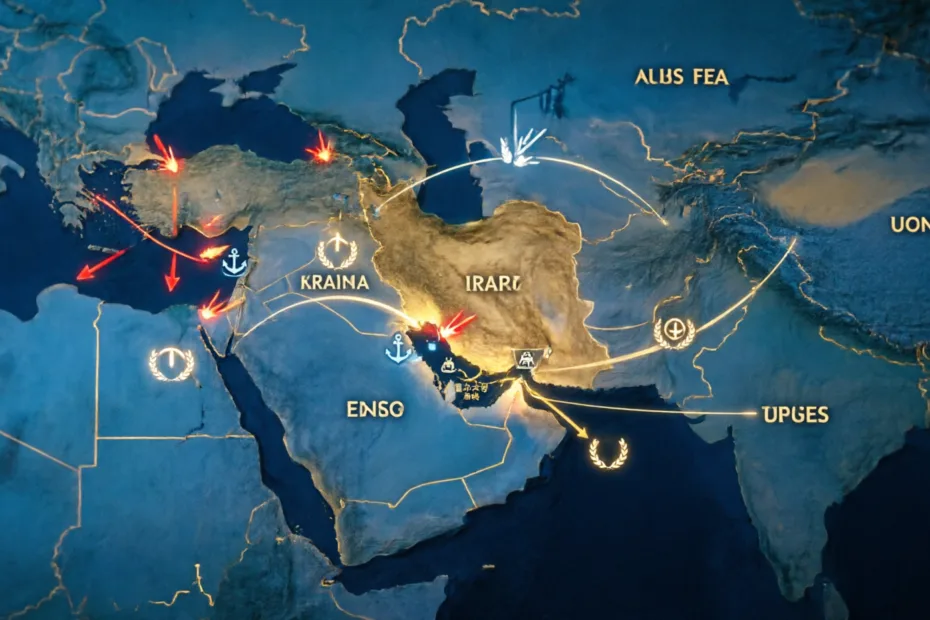
USA-Israel-Iran War 2026: Complete Analysis, Ceasefire Status & What Comes Next
Introduction
The Middle East faces its most dangerous crisis in decades as the United States and Israel engage in an unprecedented military conflict with Iran. What began with coordinated airstrikes on February 28, 2026, has evolved into a complex regional confrontation with global implications.
On NAJIAPP, we bring you this comprehensive analysis of the USA-Israel-Iran war, examining the latest developments, ceasefire negotiations, military strategies, and the critical roles played by Pakistan, China, Russia, Turkey, and Egypt in this unfolding crisis.
Timeline of the Conflict: How We Got Here
February 28, 2026: The Strike That Changed Everything
The conflict erupted when the United States and Israel launched coordinated precision airstrikes targeting Iranian military installations, nuclear facilities, and leadership compounds. The strikes resulted in the death of Supreme Leader Ali Khamenei and several senior Iranian officials, marking an unprecedented escalation.
March 2026: Iranian Retaliation
Iran responded with:
- Ballistic missile barrages targeting Israeli cities and US military bases in the Gulf
- Drone attacks on critical infrastructure in Saudi Arabia and the UAE
- Strait of Hormuz disruption, threatening 20% of global oil supply
- Proxy activation through Hezbollah, Houthis, and Iraqi militias
April 8, 2026: Pakistan-Mediated Ceasefire
After weeks of intense fighting, Pakistan successfully brokered a two-week ceasefire agreement. However, the truce has been repeatedly violated, with both sides accusing each other of bad faith.
April 21, 2026: Extended Truce Talks
President Trump announced an extension of the ceasefire pending further negotiations in Islamabad, while simultaneously maintaining a naval blockade on Iranian ports and warning that US forces remain on high alert.
Current Situation: Where Things Stand in May 2026
The Fragile Ceasefire
As of May 4, 2026, the ceasefire remains precariously intact but deeply troubled:
✅ What’s Working:
- Direct combat between US/Israeli and Iranian forces has decreased
- Pakistan continues to facilitate dialogue in Islamabad
- China, Russia, Turkey, and Pakistan have formed a diplomatic quartet pushing for guarantees
❌ Major Violations:
- Israel continues operations in Lebanon, which Iran considers a ceasefire violation
- Strait of Hormuz remains partially closed, disrupting global energy markets
- Cyber attacks and covert operations continue unabated
- Proxy forces in Iraq, Syria, and Yemen remain active
US Naval Blockade Intensifies
The United States has imposed a comprehensive naval blockade on Iranian ports, citing repeated ceasefire violations. This move has:
- Further crippled Iran’s economy
- Raised tensions with China and Russia
- Caused oil prices to surge past $120/barrel
- Prompted emergency UN Security Council sessions
Is the US Preparing for Ground War? Analyzing the Evidence
Contingency Plans Confirmed
Multiple credible sources indicate that the Pentagon has developed detailed options for ground operations in Iran:
What We Know:
- Weeks-long ground operation scenarios have been war-gamed
- Amphibious assault plans targeting Kharg Island (Iran’s critical oil terminal) exist
- Detention facility preparations for potential Iranian POWs have been discussed at the highest levels
- Special Forces deployments to neighboring countries have increased
But Here’s the Reality Check:
Why Full-Scale Invasion Remains Unlikely:
- Geographic challenges: Iran is 636,000 square miles with mountainous terrain
- Military costs: Estimates suggest 200,000+ troops needed for occupation
- Domestic opposition: American public shows limited appetite for another Middle East war
- Regional backlash: Could unite the Muslim world against the US
- Economic impact: Would send oil prices above $200/barrel, triggering global recession
Expert Assessment: The US appears to be using ground war preparations as leverage in negotiations rather than an imminent operational plan.
Beyond Boots on the Ground: US Regime Change Strategies
If not full-scale invasion, what options does the United States have to pressure or change the Iranian regime? Here’s a detailed breakdown:
1. Economic Warfare & Sanctions
Current Status: Already at maximum pressure
- Secondary sanctions on any entity trading with Iran
- Complete financial isolation from SWIFT
- Cryptocurrency transaction monitoring and blocking
- Oil export restrictions enforced by naval blockade
Effectiveness: ⭐⭐⭐☆☆
Limited additional leverage; Iran has adapted through black markets and Chinese trade
2. Cyber Warfare Campaign
Targets:
- Iranian nuclear program control systems
- Energy grid infrastructure
- Revolutionary Guard communications
- Banking and financial networks
Effectiveness: ⭐⭐⭐⭐☆
Ongoing operations causing significant disruption but not decisive
3. Support for Internal Opposition
Methods:
- Covert funding of protest movements
- Support for Kurdish and Baloch separatists
- Diaspora group empowerment
- Social media influence operations
Effectiveness: ⭐⭐☆☆☆
Iranian opposition remains fragmented; regime maintains strong security control
4. Targeted Leadership Decapitation
Already Executed:
- Supreme Leader Khamenei killed (Feb 28)
- Parliament Speaker Larijani eliminated
- Multiple IRGC commanders targeted
Effectiveness: ⭐⭐☆☆☆
Has not triggered mass uprising; new leadership has consolidated power
5. Information & Psychological Operations
Tools:
- Persian-language broadcasting (Radio Farda, VOA)
- Social media campaigns
- Satellite TV programming
- Leak operations exposing corruption
Effectiveness: ⭐⭐☆☆☆
Limited penetration due to state media control and nationalist rally effects
6. Diplomatic Isolation
Strategy:
- Pressuring allies to downgrade relations
- Blocking Iran from international organizations
- Excluding Iran from regional security frameworks
Effectiveness: ⭐⭐⭐☆☆
Partially successful; China and Russia maintain engagement
7. The “Venezuela Model”
Concept: Remove top leadership and install compliant interim government
Challenges:
- No viable moderate alternative exists within Iranian system
- Would require ground forces to protect interim government
- Likely to trigger civil war rather than smooth transition
Effectiveness: ⭐☆☆☆☆
Least viable option given Iranian political realities
Regional Powers’ Roles: Pakistan, China, Russia, Turkey & Egypt
The USA-Israel-Iran conflict has drawn in major regional and global powers. Here’s how each is positioning itself:
🇵🇰 Pakistan: The Neutral Mediator
Official Position: Strict neutrality; condemned all attacks
Active Roles:
- ✅ Primary ceasefire broker (April 8 agreement)
- ✅ Host of Islamabad Peace Talks
- ✅ Proposed two-phase peace framework
- ✅ Coordination with China on diplomatic solutions
Challenges:
- Domestic Shia protests demanding stronger action
- Energy crisis from Hormuz disruption
- Defense pact obligations to Saudi Arabia
- Economic vulnerability to regional instability
Influence Level: ⭐⭐⭐⭐⭐ (Critical mediator)
🇨🇳 China: The Strategic Balancer
Official Position: Opposes regime change; advocates UN-led negotiations
Actions Taken:
- Co-proposed 5-point peace plan with Pakistan
- Vetoed UNSC resolution on Hormuz navigation
- Continued oil purchases from Iran (despite sanctions)
- Diplomatic coordination with Russia
Strategic Interests:
- Energy security (25% of oil from Gulf)
- Belt and Road Initiative stability
- Preventing US hegemony in region
- Protecting $400B+ in regional investments
Limitations:
- Avoids direct military confrontation
- Prioritizes economic over ideological goals
- Limited leverage over Israel/US
Influence Level: ⭐⭐⭐⭐☆ (Major diplomatic player)
🇷🇺 Russia: The Opportunistic Partner
Official Position: Condemns US-Israel strikes; supports Iranian sovereignty
Strategic Calculus:
- ✅ Benefits from US distraction from Ukraine
- ✅ Maintains military-technical cooperation with Iran
- ✅ Strengthens anti-Western alliance
- ✅ Gains leverage in energy markets
Actions:
- Diplomatic coordination with China at UN
- Military equipment supplies to Iran (pre-war)
- Intelligence sharing
- Promotes multipolar world order narrative
Influence Level: ⭐⭐⭐☆☆ (Significant but secondary to China)
🇹 Turkey: The NATO Mediator
Official Position: Condemns escalation; offers mediation
Balancing Act:
- NATO member with economic ties to Iran
- Hosts 3+ million refugees; fears new wave
- Kurdish conflict concerns (spillover risk)
- Energy dependency on multiple sources
Diplomatic Efforts:
- Shuttle diplomacy between Washington and Tehran
- Proposed inclusive regional security framework
- Coordination with Qatar and Oman
Influence Level: ⭐⭐⭐☆☆ (Moderate; trusted by multiple sides)
🇪 Egypt: The Cautious Observer
Official Position: Calls for restraint; emphasizes dialogue
Security Concerns:
- Regional destabilization risks
- Suez Canal security (12% of global trade)
- Muslim Brotherhood resurgence fears
- Economic vulnerability to oil prices
Potential Role:
- Backchannel communications (discussed by Israeli sources)
- Arab League leadership
- Limited leverage compared to Pakistan/Turkey
Influence Level: ⭐⭐☆☆☆ (Limited but respected voice)
Global Impact: Economic, Energy & Geopolitical Consequences
Oil Markets:
- Prices surged from $75 to $120+ per barrel
- Strategic Petroleum Reserves activated globally
- Recession fears mounting in Europe and Asia
Global Trade:
- 20% of world oil supply disrupted
- Shipping insurance costs up 400%
- Alternative routes (longer, more expensive) activated
Geopolitical Realignment
Emerging Blocs:
- US-Israel-Gulf States (explicit/implicit alliance)
- China-Russia-Iran (anti-hegemony coalition)
- Non-Aligned Mediators (Pakistan, Turkey, Egypt, India)
Long-Term Shifts:
- Accelerated de-dollarization efforts
- Regional defense pacts strengthening
- Nuclear proliferation concerns intensifying
What Comes Next? Three Possible Scenarios
- Ceasefire holds through summer 2026
- Gradual de-escalation through Pakistani/Chinese mediation
- Limited sanctions relief in exchange for Iranian concessions
- Outcome: Unstable peace; conflict simmers but doesn’t reignite
Scenario 2: Controlled Escalation (35% Probability)
- Sporadic violations continue
- US/Israel conduct limited strikes on nuclear facilities
- Iran responds through proxies, not directly
- Outcome: Prolonged low-intensity conflict; no regime change
Scenario 3: Regional War (25% Probability)
- Ceasefire collapses completely
- US ground operations limited to coastal areas
- Iran closes Strait of Hormuz entirely
- Hezbollah opens full front against Israel
- Outcome: Catastrophic regional war; global economic crisis
Key Takeaways for Readers
- The ceasefire is holding by a thread – violations continue but full-scale war has paused
- US ground invasion unlikely – preparations are leverage, not imminent action
- Pakistan plays critical role – Islamabad Talks are the main diplomatic channel
- Economic warfare is primary US tool – sanctions, blockade, cyber attacks over boots on ground
- China-Russia-Pakistan-Turkey quartet emerging as counterweight to US-Israel
- Global economy at risk – oil prices, trade routes, inflation all vulnerable
- No easy solutions – regime change extremely difficult; containment more likely
Conclusion: A Defining Moment for the Middle East
The USA-Israel-Iran conflict of 2026 represents more than a bilateral or even regional dispute. It’s a stress test for the entire international order, pitting US military supremacy against Iranian asymmetric warfare, Western sanctions against Eastern economic alternatives, and unilateral action against multilateral diplomacy.
As of May 4, 2026, the world holds its breath. The ceasefire provides a fragile opportunity for de-escalation, but the underlying tensions remain unresolved. The coming weeks will determine whether Pakistan’s mediation can succeed, whether US maximum pressure can achieve its goals without ground war, and whether regional powers can prevent a catastrophe that would dwarf the consequences of Ukraine.
Stay informed with NAJIAPP – we continue to monitor this evolving situation and bring you verified, balanced analysis as events unfold.
FAQs: USA-Israel-Iran War 2026
Q: When did the US-Israel-Iran war start?
A: The conflict began on February 28, 2026, with coordinated US-Israeli airstrikes on Iranian targets.
Q: Is there currently a ceasefire?
A: Yes, a Pakistan-mediated ceasefire began April 8, 2026, but it has been repeatedly violated and remains fragile.
Q: Is the US planning a ground invasion of Iran?
A: While contingency plans exist, most analysts believe the US is using ground war preparations as negotiation leverage rather than planning imminent invasion.
Q: What is Pakistan’s role in the conflict?
A: Pakistan has served as the primary mediator, brokering the April ceasefire and hosting peace talks in Islamabad.
Q: How has the war affected oil prices?
A: Oil prices have surged from $75 to over $120 per barrel due to Strait of Hormuz disruptions.
Q: What are China and Russia’s positions?
A: Both oppose regime change, advocate UN-led negotiations, and continue economic engagement with Iran.
Najeeb Alam
Special thanks For Qwen Studio
What do you think? Will the ceasefire hold, or is wider war inevitable? Share your thoughts in the comments below!
📱 Daily Vist NAJIAPP.COM for real-time updates, verified news, and expert analysis on this and other critical global developments.